Preparing Your Child for an Assessment: A Parent’s Guide

Assessments can sometimes feel daunting for children, but with the right preparation, you can ease their worries and set them up for a positive experience. Here are some simple, practical steps to help your child feel comfortable and confident ahead of their upcoming assessment.

Talk About the Assessment

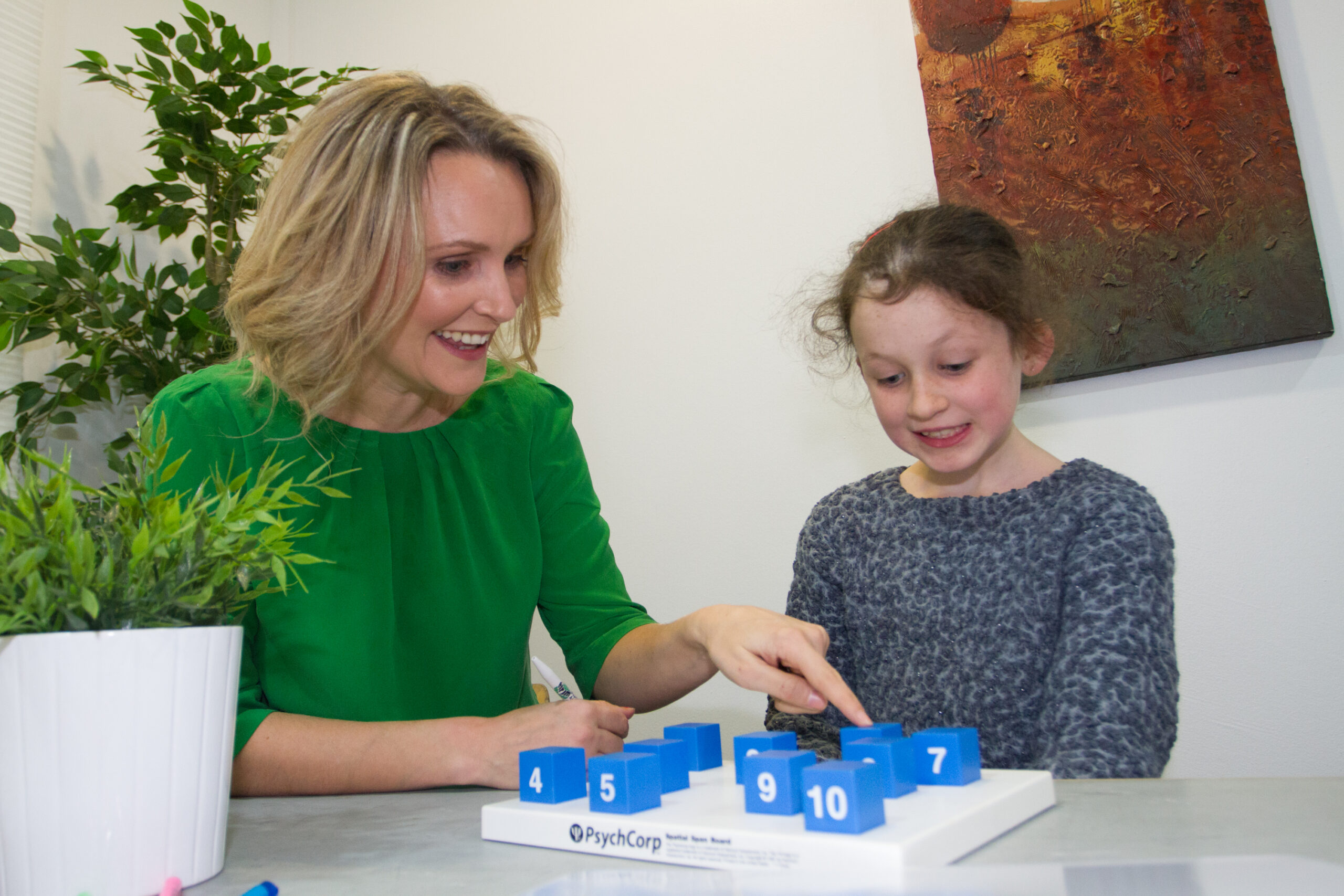
Start by having an open conversation with your child. Let them know where they are going, who they will meet, and what kinds of activities they might do. This information helps reduce uncertainty and anxiety.
If the assessment takes place in an office, show your child pictures of the space and staff (many are available on our website). Reassure them that the environment is friendly and relaxed, and that they can take breaks whenever needed.

Use Child-Friendly Language

Words like “testing” or “assessment” can sometimes cause stress. For younger children, focus on the playful elements by describing it as puzzles and games. For older children, you can say it’s a mix of fun activities and school-type tasks, but remind them that there will be no grades or scores. This approach makes the process feel less intimidating.

Ensure Rest and Nutrition

Being well-rested and nourished makes a big difference. Encourage an early bedtime the night before, and offer a healthy breakfast on the morning of the assessment. A rested mind and body help your child concentrate and do their best.


With these simple steps, you can make the assessment a calm and even enjoyable experience for your child. Above all, your reassurance and encouragement are the most powerful supports you can provide.

Need More Help?

If you’d like more guidance or want to discuss specific concerns, our psychologists at Éirim are here to help.

📍 Website: www.eirim.ie
📧 Email: info@eirim.ie
📞 Telephone: 01 499 2217

One Act of Kindness That Will Change Lives

I feel compelled to write this because I have witnessed one of the kindest and most selfless acts from someone that walked through our doors.

John is a professional man in his 30’s working within the restaurant trade. He contacted Eirim for an educational assessment because he was experiencing difficulties within his job, he was doubting his ability and his self-confidence was being eroded. He described himself as forgetful and prone to making seemingly careless errors (e.g. taking down restaurant bookings wrong over the phone, and mixing up orders and e-mail bookings). John arranged to meet one of our educational psychologists to gain a better understanding of himself, why he was struggling and how he could help himself.

John reported that he never received any learning support or extra help in school and that he always managed to get along. However, he felt that he under-achieved in school – working hard but never getting great grades.

Results from the educational assessment showed that John was an intelligent man, but he had subtle difficulties processing language. He had no problems reading text but he had difficulties understanding what he read (reading comprehension).  These difficulties explained why he was finding aspects of work difficult.  Strategies for his job were recommended.

A few months after his educational assessment John contacted our office again to say that the assessment with us had ‘changed his life’. He told us that before the assessment, his self-confidence was being eroded and that he always doubted his ability. However, the knowledge the assessment gave him about himself, his strengths/ weaknesses and how he learns, has helped him greatly in his job,  has seen his own self confidence grow and has even spurred him on to write his first book (!).

So why is the above one of the most selfless and kind acts I have witnessed? Following his hugely positive experience John decided to purchase ‘vouchers’ for two full educational assessments from us and donate them to his old primary school. He felt that even though his assessment was massively beneficial to him as an adult, to a child such an assessment would be invaluable – since this is a time when intervention and supports can really make a difference.  Unfortunately, there are many children that need to be assessed but cannot afford to go through the process. However, with his financial support, two children will have an opportunity to go through the educational assessment process and hopefully have the same positive experience that he did. Thank you John.

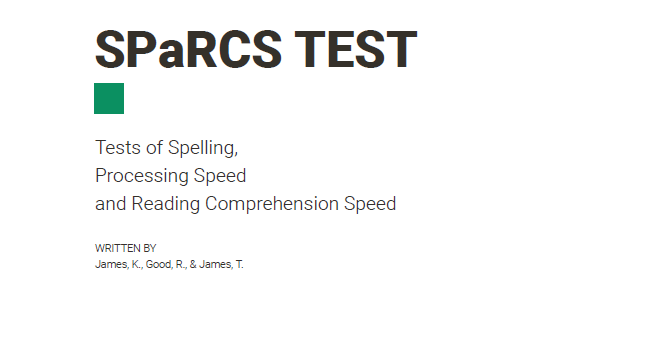
Getting the SPaRCS Out of Your Students

Éirim, in partnership with Education Elephant, is delighted to announce the launch of a brand-new, UK- and Irish-normed standardised test: SPaRCS – Spelling, Processing speed, and Reading Comprehension Speed (with some innovative extras built in!).

Designed for students aged 13–18, SPaRCS will be available for purchase through Education Elephant Ltd. from September 2017. It fills a significant gap in the market, offering teachers a practical, time-efficient, and up-to-date assessment tool.

Why SPaRCS?

The test was conceived and developed by Dr. Kate James, Educational Psychologist, Dublin. In her work with special education teachers in Ireland and SENCos in the UK, Dr. James recognised two major challenges:

  • A shortage of Irish-normed and modern standardised tests

  • The time and resource burden of testing for access arrangements and supports

In the UK, SENCos also faced a particular lack of tests appropriate for assessing eligibility for 25% extra time in exams. SPaRCS was created to directly address these challenges.

Key Benefits of SPaRCS

  • Can be administered in a group setting

  • Affordable (approx. £230)

  • Time-efficient (fits comfortably into one 40-minute class)

  • Produces reliable standard scores

  • Includes innovative effort indicators to ensure valid results

  • Suitable evidence for:

    • UK: 25% extra time, reader/computer reader, and scribe applications (JCQ)

    • Ireland: Spelling and Grammar Waiver applications

What’s Inside the Test?

SPaRCS is based on data from a large sample of over 2,000 students across Ireland and the UK. It includes three core components:

  1. Spelling

  2. Processing Speed (2 minutes)

  3. Reading Comprehension Speed (10 minutes)

The inclusion of effort indicators makes SPaRCS particularly innovative. Research shows that some students underperform deliberately in hopes of qualifying for accommodations. SPaRCS helps identify when this may be happening, ensuring fair and accurate assessment results.

Supporting Students Fairly

In Ireland, the most common examination accommodation is the Spelling and Grammar Waiver, while in the UK, applications for extra time, readers, and scribes are frequent. SPaRCS provides a reliable and efficient way to support these applications while reducing the testing burden on schools.

How to Order

SPaRCS is available exclusively through Education Elephant.
👉 For more information or to place an order, visit Education Elephant or contact info@educationelephant.ie.

Does the Spelling and Grammar Waiver Give an Unfair Advantage?

New research led by Dr. Kate James from Éirim: The National Assessment Agency (James & Hannah, 2017) suggests that the Spelling and Grammar Waiver (SGW), widely used in the Junior and Leaving Certificate, may provide an unfair advantage to students who receive it. This raises important questions about the fairness and validity of this exam accommodation.

What is the Spelling and Grammar Waiver?

The SGW was introduced in 2001 by the State Examinations Commission (SEC) for students with dyslexia and spelling difficulties. It is designed to ensure that these students are not disadvantaged and can demonstrate their true ability in exams.

In practice, students granted the SGW are not penalised for spelling or punctuation errors, which normally account for 10% of the English Language paper in the Leaving Certificate. Instead, their marks are pro-rated—they still receive credit for this 10%, based on their performance on the rest of the paper.

The SGW is now the most popular exam accommodation, with around 9% of all Leaving Certificate students using it, and numbers are rising each year. Until recently, however, no research had examined its fairness.

The Study

James and Hannah (2017) analysed a sample of mock Leaving Certificate papers, split between students who had been granted the SGW (due to dyslexia) and those who had not. Each paper was marked twice by experienced examiners: once applying the waiver, and again two months later without it. Crucially, examiners were unaware they were marking the same scripts twice.

The researchers reasoned that, if valid, an accommodation should help the intended group (students with dyslexia) without significantly benefiting others. For example, enlarging an exam paper helps a student with visual impairment, but offers little benefit to a student with normal vision. Similarly, reading an exam aloud supports students with reading difficulties but does not provide a large advantage to fluent readers.

Key Findings

The results were striking:

  • All papers marked with a SGW—both from dyslexic and non-dyslexic students—received considerably higher grades than when marked without it.

  • This suggests the SGW boosts results across the board, not just for students who genuinely need the accommodation.

  • At the individual level, 61% of dyslexic students scored higher with the SGW, but 29% actually scored lower.

These findings cast doubt on the fairness of the SGW. Rather than simply levelling the playing field, the waiver may artificially inflate marks for all students who receive it, regardless of need.

Implications

As James and Hannah (2017) concluded:

“Given the high-stakes nature of the Leaving Certificate, it is imperative that everyone can have confidence in the interpretation of students’ results. We need to ensure that the marks a student receives are a true reflection of their performance and not an inflated view.”

With more students applying for the SGW each year, this research highlights the need for careful review by the State Examinations Commission to ensure fairness and validity in the exam system.